


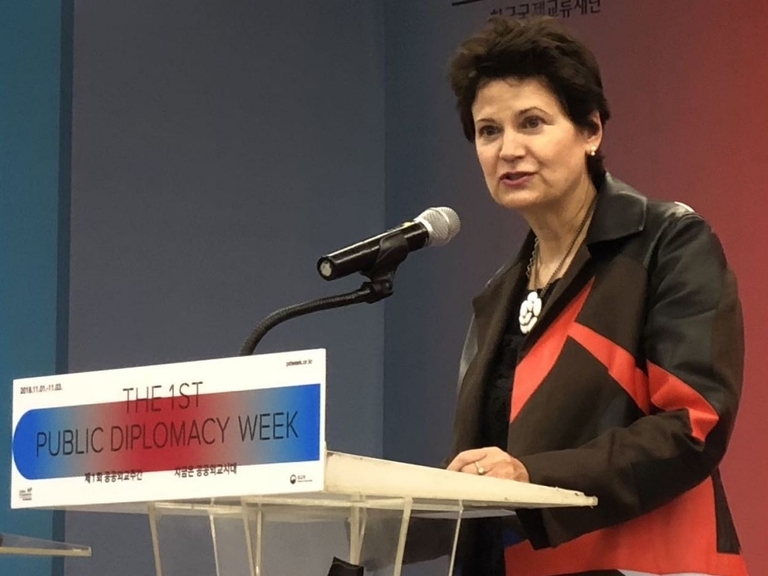
We have made an interview with a very respected scholar of public diplomacy, Professor Nancy Snow. We have talked about public diplomacy, Trump administration’s policies, soft power status of USA and Turkey’s role in the world.
Nancy Snow who is Professor Emerita of Communications at California State University, Fullerton is a globally recognized scholar of public diplomacy, strategic communication, and propaganda studies. Her career bridges academia, policy, and media across key diplomatic capitals, including Athens, Ankara, Beijing, Tokyo, and Washington, D.C.
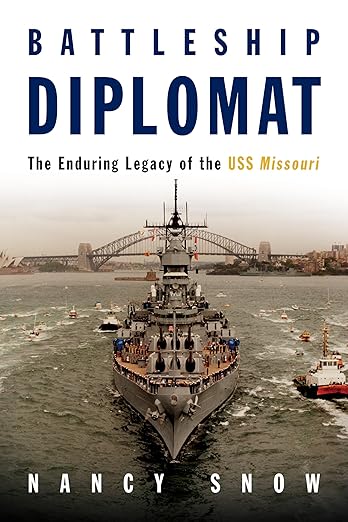
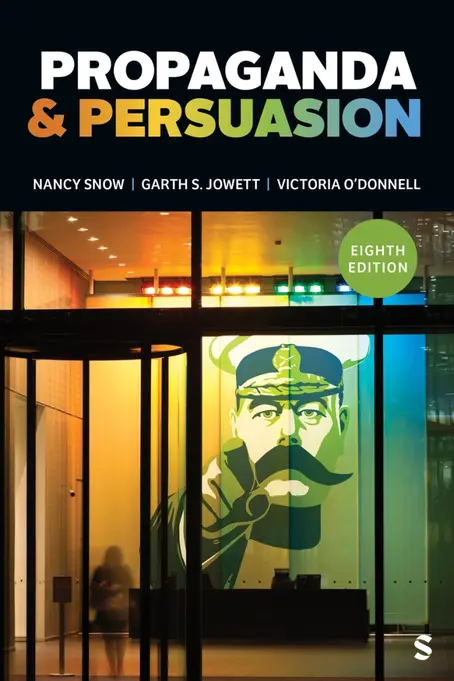
She is also the author of many books. Recently she published (with co-authors) “Propaganda and Persuasion (Eighth Edition, Sage, 2025)” and “Battleship Diplomat: The Enduring Legacy of the USS Missouri (Naval Institute Press, 2026).”
Here are the answers of Professor Snow to our questions:
1) Has the U.S.’s claim to be a soft power completely vanished during Trump’s second term?
If I were a pessimistic person, I might say that the U.S. dominance in soft power is on life support. Since I choose to a glass is half-full person, I would argue that American soft power has been significantly weakened and, more importantly, destabilized. It is concentrated in Washington in the hands of a few. We need to widen the scope of representation and participation to regain our strength in soft power.
My friend and co-editor, Nicholas J. Cull, was asked to write a blurb for my forthcoming book, Battleship Diplomat: The Enduring Legacy of the USS Missouri (Naval Institute Press, 2026.) Cull reflects on a sense of loss in American global appeal, symbolized by the post-WWII era that I write about:
“At its heart it speaks of a perhaps lost world in which the United States knew how to balance the example of its power with the power of its example. It is both a fitting memorial and a wonderful case study of what now looks like a lost golden age of U.S diplomacy.“
Soft power in general is not a switch that turns on and off with a single administration. It is cumulative: built over decades through culture, education, alliances, and credibility. The United States still benefits from deep reservoirs of attraction such as its universities, an entrepreneurial and innovation ecosystem, and popular culture. Interestingly, the New York Times just published a piece on April 29, 2026, “In France, American Universities Lose Their Allure in the Trump Era,” that spotlights the declining pull of American higher education. It’s not only due to higher tuition costs in America, but more about the decline in the appeal of the Trump era atmosphere.
American civil society remain globally influential. Shortly after arriving to Türkiye, I attended a panel discussion where the moderator made a curious observation. He made a distinction between the people of this part of the world, which includes Iraqis, Turks, Iranians, Arabs, etc. and the West, but specifically the United States. He said that in Turkish, what you step on, the earth, is called toprak ana (Mother Earth). Then he said, with all due respect to his American friends whom I love, but some of whom I criticize, in America, it’s called dirt or soil.
I couldn’t help myself. I piped up from the audience: “I call it Mother Earth.” When he was wrapping up the session, he concluded that once upon a time, Europe and the US were the epitome of freedom of speech and choice and rules-based order and liberties. No longer, he said. In Turkey, with all its criticism of Erdogan, AK Party, government, politics, he said that people could still speak as we were doing during the panel session.
After the session, I challenged him that we still have freedom of speech and choice in the U.S., and I mentioned the recent outpouring of the 10 million strong No Kings marches across the United States. People have been regularly protesting in the U.S. since Trump has returned for a second term, but even before that. Yes, there has been some violence and even protesters killed by ICE in Minneapolis. But it’s not a “no longer” situation. U.S. citizens regularly mock and criticize President Trump and his senior team online and in print, broadcast, and online media. So even though I’ve been known to be often critical of U.S. foreign policies and war interventions, I’m quick to defend the United States, our Bill of Rights, and American civil society. If we lose our ability to dissent, we lose our voice. That’s not to say that people aren’t more aware of ‘paying a price’ for speaking up. Many of my American friends are afraid to be too openly critical because of our polarized political climate.
Bottom line: American soft power hasn’t completely vanished and there are mid-term elections in the U.S. that are going to reshape the political landscape, hopefully for the better and for more balance and checks and balances in Washington.
2) What kind of rhetoric is the Trump administration developing in U.S. foreign policy, and is this rhetoric consistent with U.S. interests?
The dominant rhetorical style is populist-nationalist and highly personalized, with three defining features:
- Transactional language: “What do we get?” vs. “What do we build together?”
- Adversarial framing, even toward allies
- Performative communication, designed as much for domestic audiences as for international ones
Trump’s rhetoric is more effective politically at home because his mocking Truth Social style is what we know. We don’t know another Trump. I have referred to President Trump as the most un-self-conscious leader I’ve ever analyzed. What looks like “unselfconsciousness” can also be interpreted as a strategic disregard for norms: breaking protocol to signal authenticity or outsider status. He always loves the role of the disruptor who does it to make America great again. His performance style is one of dominance: asserting hierarchy visually and physically, as the world saw when he cut in front of Queen Camilla to shake the hands of his senior advisors. He’s most savvy, although offensive and outrageous, at a certain media logic awareness. Attacking the press, as he did in his first campaign and continues to do now as a lame duck president, creates moments that are highly shareable and attention-grabbing. His Easter Sunday tweet was my red line. It awoke a sense of wanting to speak up more as an American citizen. I choose not to go after POTUS since I respect the Oval Office, but I am reposting and sharing my own posts more about my distaste for his rhetorical style.
Trump may not be entirely unselfconscious so much as differently conscious. He is certainly bereft of diplomatic etiquette—which goes to show that money cannot buy class–and more attuned to spectacle and audience reaction. If you broaden the comparison set, other leaders sometimes described (fairly or not) as norm-disrupting or unusually unfiltered include figures like the UK’s Boris Johnson or Brazil’s Jair Bolsonaro. But Trump stands out for the outrageous consistency and global amplification of this style.
Is it consistent with U.S. interests? In the short term, sometimes yes, especially when leverage and pressure produce concessions. But in the long term, it is problematic. Why? Because U.S. global leadership has historically depended not just on power, but on legitimacy. If partners and allies begin to doubt U.S. reliability, they hedge, diversify alliances, or pursue autonomy. That weakens the very system that has served U.S. interests since 1945.
3) How did the U.S. and Israel use propaganda in the war they launched against Iran, and why was this propaganda not effective enough?
The communication strategy relied heavily on strategic narratives of preemption and legitimacy, neither of which passed the credibility test, or as we might say in colloquial American English, it didn’t pass the smell test. Secretary of War Pete Hegseth and President Trump became the chief messengers. Hegseth just had a shocking six-hour appearance before the U.S. Congress this week that underscored his lack of regard for the American people or military under his command. Many were calling for him to resign. The U.S. and Israel used propaganda to support an elective war that has no popular appeal, no rally-round-the-flag dimension. It’s a non-starter. They framed their preemptive strikes as necessary for regional stability—well how did that work out? They emphasized deterrence and security threats that triggered these actions, without consulting with any existing alliances. They used selective intelligence disclosures to shape perception.
Their limitations were clear:
- Fragmented information environment
Audiences today are not passive recipients. Competing narratives from Iran, non-state actors, and global media ecosystems quickly challenge official messaging. We could have a second interview on the Iranian Legos videos; I’ve been interviewed well almost every day by the press over the last month regarding these videos. Here is one example based on an interview I gave to ABC News Australia: https://www.instagram.com/reels/DXbc4_fFzHd/ - Credibility deficit
Past conflicts (notably Iraq) continue to shape public skepticism toward U.S. intelligence claims. Once credibility is questioned, even accurate messaging struggles to gain traction. - Overreliance on top-down messaging
Effective persuasion today requires networked communication, what we know as engagement, dialogue, and third-party validation. Traditional state-centric propaganda is less persuasive in a decentralized media environment. But Trump and Hegseth continue to be the main spokespeople on the war and how it’s going. No wonder public support continues to drop. - Emotional mismatch
While official rhetoric has been emphasizing security, global audiences have often responded to humanitarian imagery and civilian impact. This has created a gap between message and perception. - Regarding Israel specifically, I’m quite amazed to see that Israel has announced a three-quarters of a billion uptick in its public diplomacy/propaganda investment. “Israel just quadrupled its PR budget to $730M. Experts say it won’t work.” I know all of the people mentioned in the article. Joanna Landau, a guest lecturer in my class, is now heading a Reputational Security Lab at the same university. My graduate course in Israel, “Marketing Foreign Policy,” was at the invitation of Alex Mintz, Dean of the Lauder School of Government, Diplomacy and Strategy at IDC (now Reichman University) from 2008-2014. In 2011, the first question I asked the IDF alumni and now Master of Diplomacy Students, was, with hands on hips, “How’s that Brand Israel working out for you?” Some of them said, “We’re underdogs. We are being attacked for our right to exist.” I countered by saying, “That’s interesting. I’d see you as big dogs. You have nuclear weapons.” One of the students said sheepishly and with a slight grin, “Well, we don’t talk about that.” They were a lively bunch, and I enjoyed our sparring with them and watching them spar with each other. I cannot imagine teaching a course like this in 2026 or after October 7, 2023. Israel’s nation brand—its credibility–is as damaged, perhaps even more than the United States, due to actions taken by its leaders at the top. Actions and policies, speak louder than dollars in power politics, especially involving two nuclear powers and two of the leading militaries in the world. Despite that resume, the U.S. and Israel still haven’t defeated the Iranian resistance and now Trump in particular is trying to wiggle his way out so that he can declare it a win. These Iranian meme videos have been a powerful counterargument because they use the headline news to create irony- and humor- delivered material using AI Hip Hop and references to Epstein that mocks the U.S. and Israel leadership.
4) How have your views on Turkey changed during your time here as a visiting scholar? Do you believe Turkey is an important power in the region and will emerge as a soft power?
My time in Türkiye has reinforced something I long believed but now understand more deeply: Türkiye is not just a regional power—it is a strategic bridge state. That’s a powerful symbol of serving in a mediating and diplomacy-first position, despite it too being a major military power and NATO member.It operates at the intersection of Europe, the Middle East, the Caucasus, and Central Asia. That geography is not just physical. I view it is diplomatic, cultural, and historical.
So far, I’ve been a visiting lecturer at a few campuses, including my host university, Baskent, but also Bilkent University, with Hacettepe University, and Ankara University to follow. I’m trying to speak to as many students as I can. I tell them as a group and as individuals that they are sitting on a gold mine of opportunity to represent Türkiye as citizen ambassadors. They do not need to become government officials. I started out professionally as a government official at the Department of State and the U.S. Information Agency when I was a newly minted Ph.D. in the 1990s. It was in the immediate post-Cold War era, and I was offered a fast-track opportunity to go into the Foreign Service and possibly become a high-level diplomat in the world. The challenge with that profession is that you have to operate in a narrower lane. You have some leeway, but by and large, you serve the president. I wanted the freedom of the classroom, and I wanted to write and speak freely, so I have had no regrets serving as a Citizen Ambassador. I take this role very seriously. The pay is not as high as that of an Ambassador, but the riches are just as rewarding. My network of contacts and connections is marinated through NGOs like Sister City International, Fulbright Binational Associations (I’ve been a Fulbright to Germany, Japan, and Greece), which makes the person-to-person diplomacy come alive.
What has impressed me most is Türkiye’s growing role in mediation and diplomatic brokerage. Whether in regional conflicts or global negotiations, Türkiye is positioning itself as a country that can speak across divides. The U.S. cannot do this. Israel cannot do this. Even the EU has suffered in its ability to speak as a unified entity. This is a new form of soft power, not based entirely on attraction—although Turkey’s cultural appeal is massive, but more about geopolitical relevance and access. Now that I’m following Turkish-related news more closely in-country, I continue to be taken in by the mediator role of the country. I am not referring exclusively to the Ministry of Foreign Affairs. I think there is something in the cultural and geographical DNA of Türkiye that sets itself up well for raising its global mediator function and role. Everyday people I encounter are open and like to have back-and-forth conversations that signal an openness of mind and character that needs nourishment and encouragement. I’m here more as a student to learn from you. This is why I’m living on campus in a dorm with other students. My doctoral dissertation was titled “Fulbright Scholars as Cultural Mediators.” I’ve been living this concept for decades in the educational exchange realm, and now I feel as if I’m living in a learning lab of mediation.
Will Türkiye emerge as a soft power? In many ways, it already has—but with important caveats. Its potential lies in a rich cultural and historical narrative (you know that already); expanding diplomatic networks, both formal and informal; a demonstrated willingness to mediate and convene parties in need of dispute resolution; and a potentially dynamic media and cultural production sector. Its challenge lies in perceptions and realities of domestic political constraints; media freedom concerns (which are somewhat universal as traditional media in the U.S., for instance, continues to lose its audience); and tensions between hard power ambitions and soft power credibility.
Soft power is always about how others see you, not how you see yourself. If Türkiye continues to invest in cultural diplomacy, mediation, and international engagement while strengthening credibility at home, it has the capacity to become one of the most influential soft power actors of the 21st century. The students and academics I’ve met here have impressed me immensely with their level of engagement and seriousness about making positive changes for Türkiye. I have really appreciated the level of discourse and frankness that I’ve experienced so far, and I know that I will continue to grow in my knowledge bank about Türkiye. To be sure, I will carry this experience with me as I serve in my mediator role as a transmitter of cultures I’ve experienced. This is one of the most exciting educational exchange appointments of my career, and for that, I’m grateful.