


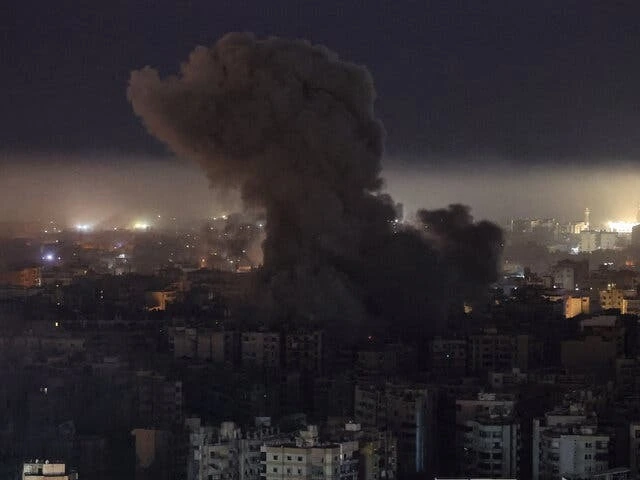
Whispers of war can be heard, yet they are not as forceful as before. Israel, on the one hand, finds itself in a state of growing global resentment, and on the other, seeks to exploit the window created by the ceasefire to gradually intensify pressure on forces affiliated with Iran. This trajectory has unfolded through concentrated pressure on the domestic politics of countries such as Iraq and Lebanon, military actions, including those directed at Venezuela, the expansion of economic influence in Azerbaijan, and the pursuit of strategic dossiers stretching from Afghanistan to Central Asia.
In this context, and in light of Iraq’s elections—through which the United States failed to secure its desired outcomes—internal disputes among Shiite groups have intensified. This process, coinciding with a relative weakening of Tehran’s position, has translated into an internal power struggle within Shiite coalitions. Reports emerging from the Nouri al-Maliki camp and his positive signals toward Washington suggest that Tehran has, for the most part, opted for a policy of de-escalation in Iraq to regroup. By integrating the Popular Mobilization Forces into the formal structure of the Iraqi army and increasing their budget, Iran appears intent on preventing broader external interference in Iraq.
Clashes within the Kurdistan Region of Iraq—ranging from internal rivalries between the Patriotic Union of Kurdistan and the Barzani camp to tribal tensions such as those involving the Harki clan—alongside attacks on energy infrastructure under Erbil’s control, largely linked to the Syrian file, point to a renewed effort to destabilize areas under Erbil’s influence. Given the region’s economic difficulties and endemic corruption, this dynamic reflects an attempt to merge the Syrian and Iraqi crises within the territory controlled by the Kurdistan Regional Government and to extend this instability across Iraq as a whole.
Meanwhile, attacks in Syria targeting U.S. forces, as well as the issue of terrorist incidents in Australia, appear less directly focused on Iran—contrary to some media portrayals—and more indicative of Israel’s efforts to deepen its penetration of Syria while legitimizing the re-emergence of ISIS and other takfiri groups. The same logic underpins pressure on the government of Ahmad al-Sharaa to rapidly equip its affiliated forces for potential intervention in Lebanon.
Lebanon itself has become the arena of intense disputes and negotiations among Shiite factions, Hezbollah, and the Lebanese Forces (LF), with the declared objective of disarming Hezbollah. U.S. and Israeli pressure seek to condition economic assistance on resolving this issue, even as it appears unlikely that Hezbollah will accept disarmament. This time, unlike the 1980s when Israel entered Beirut directly, the strategy seems aimed at transforming Syria into the gateway for intervention in Lebanon. The escalating rhetoric and competition among religious factions, including Salafi groups in Beirut, suggest that Syria has become a central hub through which influence over Iraq and Hezbollah is orchestrated. At the same time, cells affiliated with Tehran—extending even as far as Jordan—are gradually preparing to reactivate the doctrine of “defense beyond the borders” should tensions intensify.
Pressure on Venezuela and the prospect of an attack on Caracas must also be understood within this broader framework. Venezuela, alongside countries such as Paraguay and Colombia, has long been considered a sphere of Hezbollah’s political and economic influence. Drug cartels have played a significant role in financing and laundering money for these networks. Although figures such as Assad Barakat and Ayman Joumaa—once central to these operations—have seen their influence curtailed in Colombia and Brazil, the networks themselves remain active. South America hosts nearly ten million people of Lebanese origin, with these networks extending as far as Mexico. Alongside U.S. objectives related to Venezuela’s oil sector, dismantling Hezbollah’s transnational networks has been revived under the Cassandra Project, a campaign whose implications ultimately reach Tehran.
Near Iran’s borders, clashes between Tehrik-e-Taliban Pakistan and the Pakistani army, along with the limited jihadist activities of Lashkar-e-Taiba and figures such as Ghazi Mohammad Yaqoob Sheikh, signal renewed regional volatility. Pakistan’s Inter-Services Intelligence (ISI), even amid the return of U.S. forces to Afghanistan and despite its close ties with China, appears intent on reasserting control. Despite the weakening of the Haqqani network within the Taliban, ISI is attempting to rebuild its influence as part of a broader strategy aimed at containing India. These developments, however, go beyond the India-Pakistan rivalry and point toward a wider effort to prepare the ground for U.S. engagement with Taliban forces along Iran’s borders. Simultaneously, India and Israel are expanding their footprint in Central Asia, a trend closely monitored by Washington. Under such conditions, Kabul could emerge as a central hub for radical forces targeting Central Asia and even China, while also posing a latent threat to eastern Iran.
If one sets aside the movements of American and Israeli actors in the Caucasus, including their discreet engagements with Georgia and Armenia—which, unlike relations with Azerbaijan, remain largely opaque—and considers the so-called “Trump Corridor” as a potential project, it becomes increasingly evident that Tehran, whether it seeks to or not, is moving closer to war.
As the regional environment surrounding Iran grows more hostile—beyond America’s traditional influence in Arab states—Tehran has pursued parallel tracks. On one front, it has deepened contacts with Moscow in an effort to employ laser-based simulations, namely inertial confinement fusion (ICF), without conducting live nuclear tests. The repeated visits of Iranian officials and scientists to Russia attest to this effort. Given the construction of multiple laser simulators, uncertainty surrounding experimental results, the lack of sufficient data, and severe time constraints, Tehran appears intent on carrying out this process in Russia, particularly in the closed city of Sarov. Although these activities are closely monitored by Israel—despite Tel Aviv’s working relations with Moscow—the overall picture suggests that Iran is rapidly advancing its nuclear program.
At the same time, contradictory reports have surfaced regarding the presence of Su-35 fighter jets and advanced MiG-29 variants in Iran. None of these claims has been fully confirmed, and some reports suggest that certain aircraft remain under construction. Earlier rumors concerning the transfer of F-16s and Su-30s from Venezuela were met with silence from Tehran. In general, information related to the acquisition, transfer, or even overhaul of combat aircraft is kept highly classified, an ambiguity that arguably serves Iran’s interests—much as it did in the case of Iraqi Mirage jets that defected to Iran after the Iran-Iraq War.
Reports have also emerged regarding the possible acquisition of Chinese J-10 fighters. Yet even if these reports were accurate, the absence of pilot training by China renders any immediate deployment unlikely. More consequential is Iran’s pursuit of Russian resonance radars and Chinese HQ-9 air defense systems. There are even claims that certain S-300 units have been upgraded and limited S-400 components introduced, although Tehran simultaneously seeks to operationalize domestically produced versions of Russian systems and relocate its missile bases eastward, away from Israel’s direct strike range.
Changes in Iran’s military leadership—including the air force, air defense, and the army’s intelligence organization—are particularly notable. Younger commanders have been appointed at a time when widespread criticism targeted the performance and strategic shortcomings of their predecessors, many of whom were regarded as among the least effective figures in the military hierarchy.
Meanwhile, difficulties in securing sodium perchlorate from China and the reactivation of UN Security Council Resolution 1929—enabling inspections of Iranian vessels—have curtailed the transfer of equipment to Yemen. Production within Yemeni facilities and shipments back to Iran have also declined. This reality contrasts with media narratives portraying Yemen as independently possessing such technologies. In practice, Iran—particularly through networks linked to Brigadier General Abdolreza Shahlai, who is under U.S. sanctions—had established missile assembly lines in Yemen, with surplus production reportedly returning to Iran.
Alongside these developments, armed movements and anti-government groups operating primarily in Iran’s Kurdish regions and Baluchistan have intensified their activities. In southeastern Iran, particularly along the Baluchistan border, these groups have forged new alliances and now conduct coordinated operations not only against Iranian interests but also against Pakistan. At the same time, ISIS-Khorasan has gradually relocated into Pakistani Baluchistan, adding another layer of instability to the region.
Nevertheless, it is reported that alongside the Moscow channel and military preparations, diplomatic channels remain open. Russian intermediaries have conveyed Tehran’s message that crossing the Hezbollah red line is unacceptable. Yet readiness for war has not diminished Iran’s efforts at tactical restraint. Signals such as Tehran’s openness to discussions on Hamas’s disarmament, reduced support for the Houthis vis-à-vis Saudi Arabia, renewed engagement with Turkey to repair relations with Damascus, and attempts to exercise restraint in Iraq all suggest that Iran remains wary of a renewed war. Still, deepening social and economic fractures, currency depreciation, and mounting public discontent have significantly weakened Iran’s domestic front.
Ultimately, the most decisive factor lies in the internal power struggle. Potential successors to Ayatollah Khamenei—including his son, Javad Larijani, Mirbagheri spectrum, and Hassan Rouhani—have each opened channels of communication with the United States and Russia. The core battle is unfolding within the power structure itself. Hassan Rouhani, as a former president, is increasingly viewed as a key figure capable of managing succession without triggering war and closing the file at minimal cost.
This scenario was reportedly discussed during secret Iran-U.S. talks in Oman under the Biden administration, involving Iran’s foreign minister and Jake Sullivan. Within this framework, the United States would restrain Netanyahu while Iran would resolve the succession issue. Should this internal project fail, however, the staged expansion of Israeli involvement in Lebanon, Syria, and Iraq—combined with growing influence along Iran’s periphery—raises the possibility that Tehran could be targeted before achieving a nuclear weapon or even before consolidating succession. Alternatively, internal conflicts might be exploited to facilitate destabilization or collapse before any direct strike. In such circumstances, Tehran faces a stark choice: succession, war, the bomb, or internal crisis.