


Hazal Mintaş
Democracy is often discussed through voter turnout rates, the erosion of trust in political institutions, or the loss of functionality in traditional democratic structures. However, to analyze the future of democracy in a healthy manner, it is not enough to merely question to what extent citizens are integrated into existing political structures; it must be acknowledged that forms and practices of political participation are undergoing a profound transformation.
This issue forms a critical threshold, particularly when it comes to youth and women. While the visibility, rights demands, and digital-era developments of these two groups in the social and public spheres have accelerated more than at any other point in history, the relationships they establish with traditional political institutions have not strengthened in parallel. At first glance, this picture is evaluated with a reductionist approach as “apathy” or “disinterest in politics.” Yet, the fundamental question we must ask points to a much more structural issue: Are youth and women truly moving away from politics, or are political institutions failing to keep pace with their changing forms of participation, demands, and dynamics?
Concrete indicators in Turkey clearly reveal the dimensions of this mismatch. Although the proportion of women members of parliament in the Grand National Assembly of Turkey reached around 20 percent after the latest elections, this rate remains far behind women’s demographic weight and their deserved representation capacity. The picture in local administrations exposes an even more striking closed-door policy: the election of female mayors in only 11 out of 81 provincial municipalities and only 64 out of 922 district municipalities following the 2024 local elections proves that gender equality in local decision-making mechanisms remains little more than a theoretical aspiration.
A similar rupture is experienced in the youth field. TÜİK (Turkish Statistical Institute) data and international youth studies show that the institutional trust of the 18-29 age group in political parties and parliamentary institutions is at rock bottom, while party membership rates remain extremely low. However, this situation does not mean that young people are indifferent to social issues. On the contrary, young people possess a remarkably high political sensitivity and reaction capacity around issues such as the climate crisis, justice, freedom of expression, economic crisis, and supplementary (rights-based) initiatives. Therefore, the root of the problem is not a lack of desire to participate, but rather the ontological blindness of traditional politics in reading these demands.
The Limits of Classical Politics and the Crisis of Representation
When political participation is mentioned, the dominant dogma is still limited to casting a vote, formally registering with a political party, running around at election rallies, or seeking offices within the party hierarchy. Of course, these are fundamental elements of democracy; however, it cannot be said that they either suffice or retain their singular validity. Today, a woman may not be registered in the books of any political party, yet she can weave a powerful national campaign to combat gender-based violence. A young person not be a party member, yet they can build cross-border networks regarding the climate crisis, digital rights, the living rights of stray animals, or education policies.
This situation demonstrates that the gap between traditional political parties and civil society is deepening. Political representation cannot be measured solely by the number of seats in parliament; rather, it gains meaning through whether women and young people are the “subjects” (founders, decision-makers) of politics rather than merely its “objects” (voters, workers). Viewing them solely as potential actors of the future means ignoring their current political capacity.
Civil Society and the New Geography of Political Actors
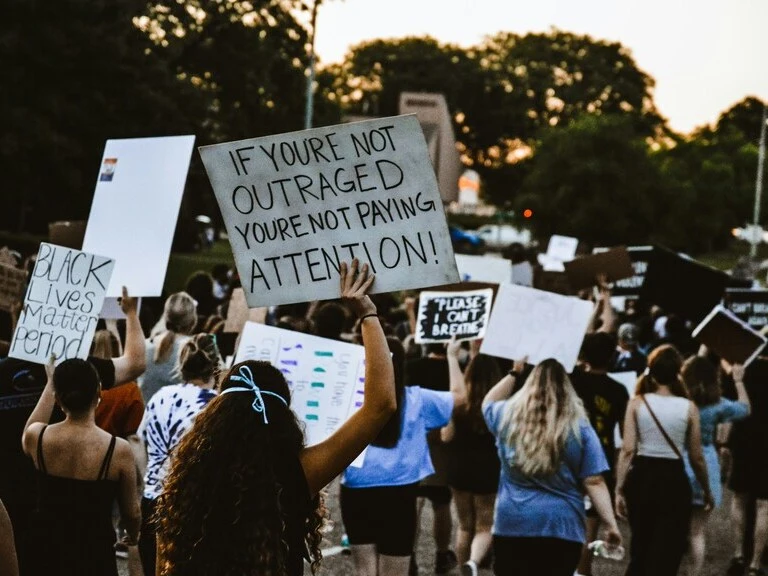
To understand this transformation, it is essential to look beyond the narrow framework of political parties toward the dynamics of civil society and social movements. In recent years, mass movements, rights-based initiatives, ecology platforms, and forms of digital activism have created a new political geography outside of classical party politics. Manifesting themselves sometimes through street actions, sometimes via campaigns in digital mediums, and sometimes through legal struggles and cultural production, these movements carry human political participation far beyond party affiliations.
This reality does not eliminate the raison d’être of political parties; on the contrary, it necessitates a radical rethinking of the hierarchical and disjointed relationship between parties and civil society. Political institutions can gain legitimacy to the extent that they can establish a continuous flow with the streets, associations, and digital squares where these demands are produced, rather than remembering these demands only in electoral regimes established once every five years.
The Digital Sphere: A New Public Sphere or a New Series of Barriers?
Both the space and form of political participation are changing skin. Many current studies, including data from the Reuters Institute Digital News Report, clearly reveal that news and political consumption in Turkey has rapidly shifted from traditional mass media to social media platforms, podcasts, and online communities. For younger generations in particular, the public sphere is no longer confined to physical party headquarters but also extends to digital networks. For women, digital mediums also turn into alternative solidarity and expression grounds that expand spaces narrowed by traditional social structures.
However, reading the digital sphere as an a priori democratization zone would be a major illusion. Digital politics brings its own paradoxes along with it; misinformation, hate speech, algorithmic filter bubbles, online harassment, and a climate of polarization pose serious threats to democratic public discourse. In an era where artificial intelligence tools and algorithmic manipulations dominate political communication processes, the critical threshold is not merely “Who can speak,” but rather “Whose voice is made visible by algorithms, which information is put into circulation, and who audits this.” In this context, digital citizenship is not just the skill of using a smartphone, but the capacity to verify information, filter out misinformation, and participate in digital public debate with ethical responsibility.
Economic Precarity and Structural Barriers
While discussing the political participation of youth and women, it is impossible to ignore the material and structural conditions that push them out of this field. High youth unemployment rates in Turkey and the dimensions reached by the NEET (Not in Education, Employment, or Training) youth mass constitute the biggest structural barrier to the political and public participation of young people. Expecting “voluntary political participation” from a youth struggling with a housing crisis, livelihood anxiety, and chronic future anxiety is incompatible with sociological reality because economic precarity directly restricts political capacity and time.
Similarly, the unpaid domestic care labor on the shoulders of women, their precariousness in the public sphere, and their problems with economic independence prevent them from adapting to the working hours and conditions imposed by politics. Therefore, increasing the presence of women and youth in politics is possible not merely by putting quota clauses into the charters of political parties, but by building fair economic and social welfare conditions that enable them to participate freely.
A New Understanding of Citizenship and the “Impact” Crisis
All these parameters tell us that we must radically renew the definition of political participation. Seeing youth and women merely as passive voters to be called to the ballot box or foot soldiers to fill party bases has lost its validity. We are obliged to accept them as the primary political actors of today.
This situation does not mean that either young people or women should be expected to silently adapt to existing broken and cumbersome political structures. On the contrary, it is essential that political institutions evolve toward changing societal dynamics, new communication languages, and radical participation demands. Participation cannot be a one-way favor or invitation; for an action to be meaningful, an individual’s voice must create a concrete response (impact) among decision-makers.
The quality of democratic participation will be determined by these critical questions: Can a young person have an independent policy proposal accepted by decision-makers? Can a woman transform the agenda-setting processes behind the closed doors of political parties? Can the demands of civil society find resonance in political decision-making mechanisms?
Bringing Politics to Where Citizens Are
Claiming that youth and women are moving away from politics is a comfortable escape; but the real courage required is to question, by confronting, how far politics itself has become detached from social reality. Instead of calling out to society and disadvantaged groups, “Come and participate in politics,” we now have to ask this question: “How should politics have meaning right at the center of your life?”
Democracy is not merely a periodic arithmetic operation where people go to the ballot box and wait for results; it is a continuous experience where people can have a say in their daily lives and sit at the decision table with their differences and demands. If we want to re-establish democracy, we should not waste time inviting citizens to exhausted structures.
Now is the exact time not to call youth and women back to traditional politics, but to bring politics itself right into the middle of that reality where they have already existed and produced life.
References
- Inter-Parliamentary Union (IPU). Women in Parliament, Turkey country data and global women’s representation indicators.
- Turkish Statistical Institute (TÜİK). Women with Statistics, indicators regarding the position of women in employment and decision-making mechanisms.
- Turkish Statistical Institute (TÜİK). Labor Force Statistics, data regarding youth unemployment and NEET rates.
- OECD (2024). Society at a Glance 2024: OECD Social Indicators.
- OECD (2024). Education at a Glance 2024, indicators of youth education and employment integration.
- Reuters Institute for the Study of Journalism (2025). Digital News Report 2025, digital news consumption, social media, and trust indices in Turkey.
- UNDP (2022). Enhancing Youth Political Participation: Promoting Opportunities for Young People to Participate in Political Processes.
- European Commission (2024). EU Youth Report 2024.
- International IDEA (2024). The Global State of Democracy 2024.
Photograph: Kalea Morgan